Source Basis
Primary source video: DOD 111688809 video - Local source path: DOD 111688809 video - First captured frame: local 5.213s, normal, 3.85x - First captured image: - Second captured frame: local 5.246s, normal, 3.85x - Second captured image:
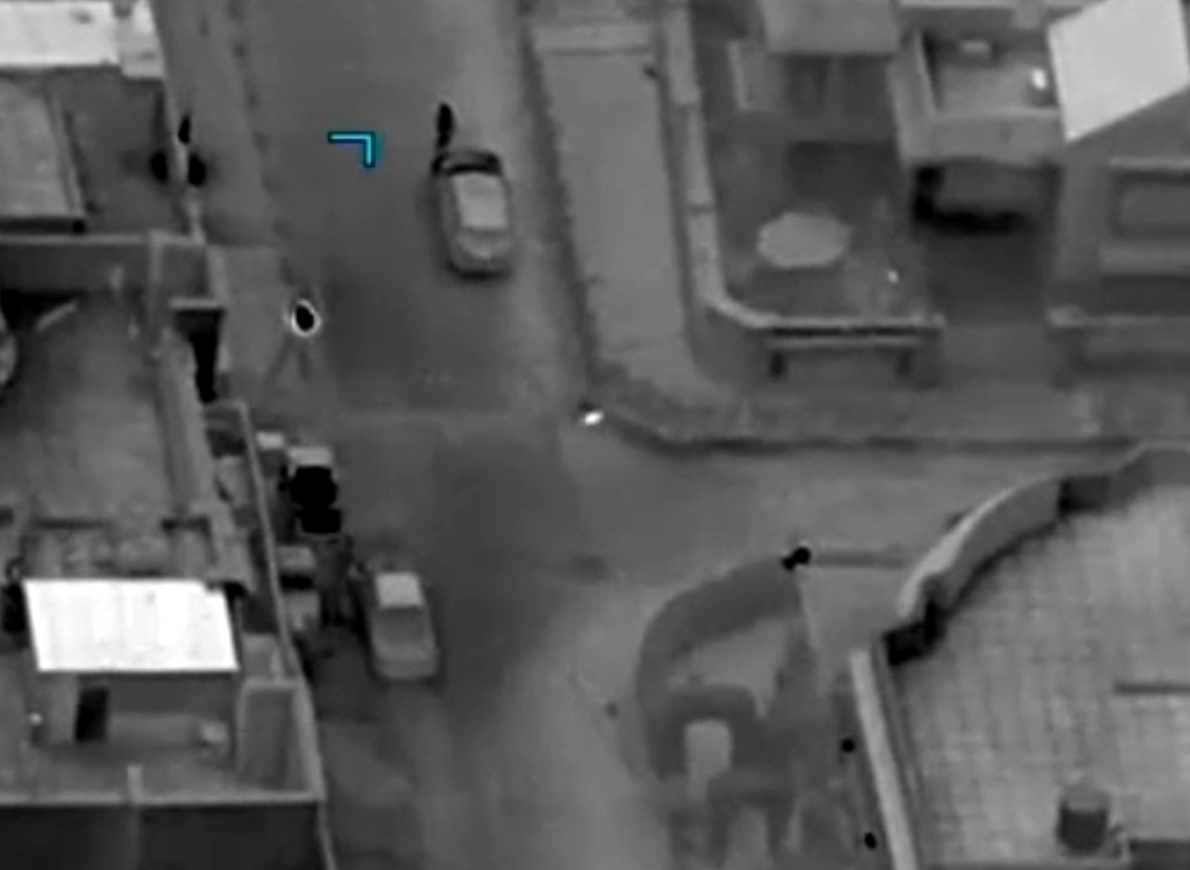
The two captures are separated by roughly 0.033 seconds. The scene is an urban thermal view with buildings, roads, vehicles, and several hot/cold point features. The request focuses on a slight shift in the surroundings between adjacent frames. In the stills, the background...
UAPs.world keeps this analysis report connected to its original source path, release context, and related analysis path so readers can inspect the evidence trail directly.
This analysis page exposes the report substance directly for readers and crawlers, while the research viewer remains the place for source inspection, frame review, and follow-up work.
Primary source video: DOD 111688809 video - Local source path: DOD 111688809 video - First captured frame: local 5.213s, normal, 3.85x - First captured image: - Second captured frame: local 5.246s, normal, 3.85x - Second captured image:
The two captures are separated by roughly 0.033 seconds. The scene is an urban thermal view with buildings, roads, vehicles, and several hot/cold point features. The request focuses on a slight shift in the surroundings between adjacent frames. In the stills, the background alignment does appear subtly different: road edges, small bright points, and the reticle-adjacent scene elements do not sit in perfectly identical positions.
The shift could mean one of several things: - normal airborne sensor stabilization or gimbal correction, - platform motion combined with digital zoom, - frame interpolation or video compression, - metadata or presentation alteration, - or, less likely from these two stills alone, deliberate tampering. The current evidence supports "frame registration/stabilization issue worth noting" more strongly than "video tampered with." A tampering claim would require a repeatable discontinuity that affects the background independently from sensor motion, compression, and reticle behavior.
The June 17 anonymous capture lead reopened DOD 111688809 video at 2.746s, with a three-second balanced window and eight requested observations. The bounded review samples are 1.246s, 1.675s, 2.103s, 2.532s, 2.960s, 3.389s, 3.817s, and 4.246s. Source-observable result: this earlier window contains an intermittent compact bright point crossing the lower urban field. The point is weak or absent in the earliest samples, becomes more distinct near 2.532s-3.817s, and sits against building/road texture rather than empty sky. The motion reads as an image-plane crossing over a structured city background, but this pass still does not separate target motion from sensor drift, parallax, stabilization, or compression.
| Sample | Source-state note |
|---|---|
| 1.246s | Urban background dominates; no durable bright contact is isolated in the submitted crop. |
| 1.675s | Background geometry remains structured, making parallax and registration controls necessary. |
| 2.103s | Faint bright detail begins to separate from lower-field texture. |
| 2.532s | Compact bright point is visible near the lower road/building area. |
| 2.960s | Bright point persists and appears displaced relative to the background. |
| 3.389s | Contact remains compact; no resolved wings, plume, or body geometry is visible. |
| 3.817s | Bright point is clearest in the crop and remains smaller than nearby urban features. |
| 4.246s | Point-like return is still visible, but the structured background keeps motion interpretation provisional. |
### 2.746s Scene Panels
| Panel | Caption | Boundary |
|---|---|---|
| Panel A - Source Window | The review sheet samples the requested three-second window around 2.746s. | Evidence: source-frame contact sheet. |
| Panel B - Geometry Read | A small bright point becomes distinct against the lower urban field and appears to move through the crop. | Observation plus image-plane inference. |
| Panel C - Control Model | The same apparent displacement can be produced or exaggerated by platform motion, gimbal stabilization, parallax, compression, and registration shift. | Conventional control lane. |
| Panel D - Limits | No range, native telemetry, stabilized centroid track, or background-locked measurement is included in this pass. | Provisional assessment. |
This request is a good calibration example. It shows why UAP review must separate target motion from camera stabilization, pan, zoom, and compression. Without that separation, ordinary stabilization artifacts can be misread as anomalous maneuvering.
Assessment: possible sensor/platform registration shift; tampering not established from the two captured stills. Treat this as a source-integrity and motion-measurement caution, not as a confirmed edit.
These UAPs.world reports cite this record. Read their findings and evidence limits, or inspect the cited material in the research viewer.
Across the three adjacent source frames, the urban background shifts as a whole. Roof edges, hot points, road-like boundaries, and the darker block at frame edge all move together rather than showing a single independent feature jumping against a fixed...
Open analysis in viewerA guide to Release 1 source material spanning historical flying-disc files, State Department cables, NASA mission records, DOW mission reports, and early DOD video analysis.
Open analysis in viewerThis refinement records dated favorite-rack snapshots as an analyst queue. Favorite state changes over time and is not an evidence grade. The report separates primary source media, existing companion reports, generated interpretive aids, and unpaired gaps...
Open analysis in viewerThese images are rendered directly for quick review, with clean image pages for crawlers and viewer links for inspection.

analysis image
Release_1/Analysis/images/dod-111688809-20260529t021137z-capture-lead.png · Updated 2026-06-13

analysis image
Release_1/Analysis/images/dod-111688809-20260529t021208z-capture-lead.png · Updated 2026-06-13

analysis image
Release_1/Analysis/images/dod-111688809-2746-balanced-review-source-frame-contact-sheet.png · Updated 2026-07-02

analysis image
Release_1/Analysis/images/dod-111688809-2746-balanced-review-geometry-review.png · Updated 2026-07-02

analysis image
Release_1/Analysis/images/dod-111688809-2746-balanced-review-enhanced-crop-review.png · Updated 2026-07-02
Classify this source for 2 points, mark useful or misleading records for 1 point, or submit observations for curator review. Public contribution points progress through Observer, Analyst I, Analyst II, Case Builder, and Archivist and can unlock field desk themes.