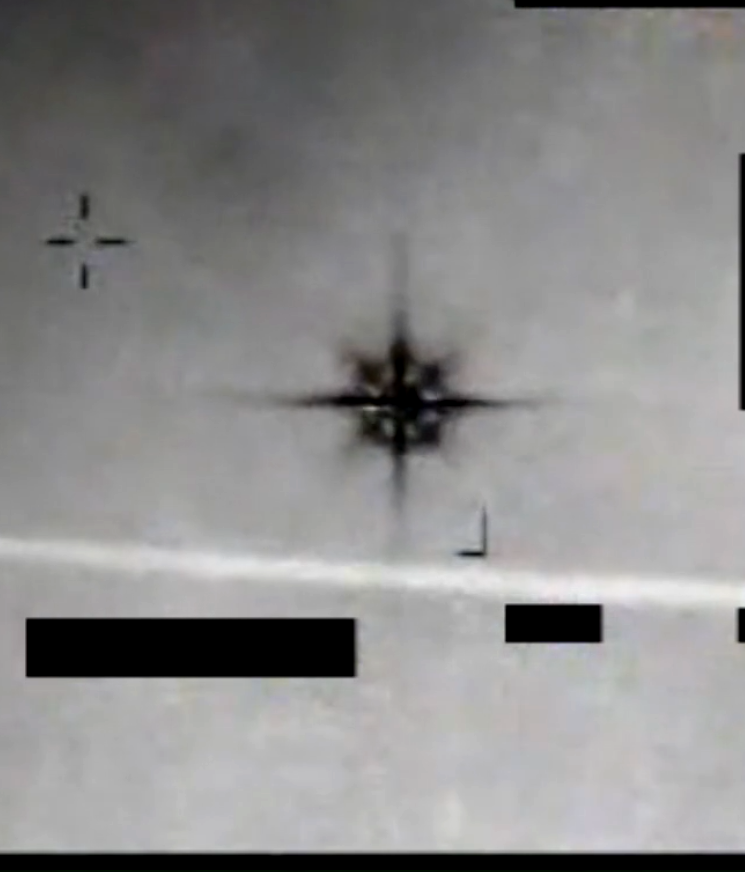
The captured close-up shows a compact dark central contact surrounded by a symmetric, cross-like bloom: a longer horizontal smear, a thinner vertical extension, and a darkened halo around the center. The pattern is visually distinct, but it is also strongly aligned to the...
UAPs.world keeps this analysis report connected to its original source path, release context, and related analysis path so readers can inspect the evidence trail directly.
Analysis report summary
This analysis page exposes the report substance directly for readers and crawlers, while the research viewer remains the place for source inspection, frame review, and follow-up work.
Observation
The captured close-up shows a compact dark central contact surrounded by a symmetric, cross-like bloom: a longer horizontal smear, a thinner vertical extension, and a darkened halo around the center. The pattern is visually distinct, but it is also strongly aligned to the image axes. That alignment matters because horizontal and vertical lobes often appear when a small high-contrast target interacts with sensor sampling, stabilization, sharpening, compression, or saturation behavior. The frame also includes a separate reticle mark at left, a small bracket-like overlay below/right of the contact, black UI masks, and a pale diagonal or horizon-like band under the target. Those surrounding elements indicate...
Hypothesis To Test
The request asks what physics or theoretical framework best fits the observed pattern. The strongest source-backed interpretation is not yet exotic field behavior; it is a compact high-contrast target producing an image-plane bloom or point-spread artifact. In ordinary imaging terms, the candidate frameworks are: - point-spread function from a bright or high-contrast compact source - sensor or video-chain blooming along pixel rows and columns - contrast/sharpening halos around a small unresolved object - compression and resampling artifacts amplified by the 2.98x zoom - motion or stabilization smear if the source was moving relative to the sensor Those frameworks fit the axis-locked cross shape better than...
Why It Matters
This is a good analysis lead because the visible shape invites a physics explanation, but the wrong explanation can be promoted too quickly from a single zoomed frame. The important distinction is between a real field structure around the object and a sensor-visible artifact created by the video pipeline. Both are meaningful: a real field structure would be a high-value UAP observable, while a sensor artifact explains why the object appears structured even when the source may only contain an unresolved point or compact thermal contrast.
Working Assessment
Assessment: unresolved compact contact with strong image-plane bloom. The visible cross-like pattern is real in the captured frame, but the adjacent-frame follow-up strengthens the fit to sensor/video-chain bloom, sharpening, or point-spread behavior around a compact high-contrast target. A speculative field-envelope model remains provisional and should not be promoted unless a wider temporal pass shows the lobe pattern behaving independently of the sensor grid.
Classify this source for 2 points, mark useful or misleading records for 1 point, or submit observations for curator review. Public contribution points progress through Observer, Analyst I, Analyst II, Case Builder, and Archivist and can unlock field desk themes.