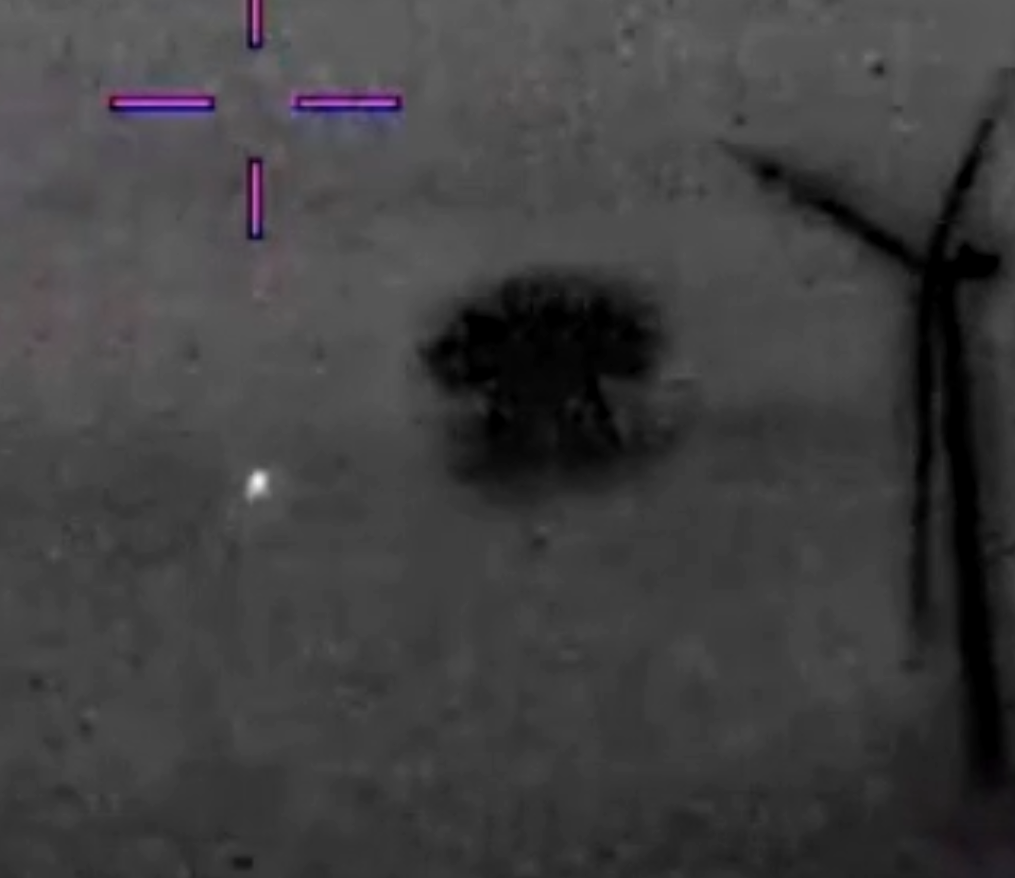
08 DOD 111689167 Bright Point Reconnaissance Behavior Assessment
The captured frame shows a small bright point low-left of center against a ground/structure background. Nearby dark terrain or structure features provide scale and contrast context, but the object itself is only a compact bright source. No wings, rotors, control surfaces,...
UAPs.world keeps this analysis report connected to its original source path, release context, and related analysis path so readers can inspect the evidence trail directly.
Analysis report summary
This analysis page exposes the report substance directly for readers and crawlers, while the research viewer remains the place for source inspection, frame review, and follow-up work.
Observation
The captured frame shows a small bright point low-left of center against a ground/structure background. Nearby dark terrain or structure features provide scale and contrast context, but the object itself is only a compact bright source. No wings, rotors, control surfaces, tail, exhaust, or resolved body shape are visible in this still. The approved request asks whether this could be a non-human drone or surveillance device. The frame can support an "unresolved compact contact" lead. It cannot, by itself, establish reconnaissance behavior.
Hypothesis To Test
The surveillance hypothesis requires behavior, not just appearance. The source should be tested for: - persistent track relative to ground features, - loitering or station-keeping, - deliberate approach to or departure from a site, - movement inconsistent with bird, aircraft, balloon, flare, or sensor artifact, - lack of ordinary propulsion or lift cues across multiple frames. If the object only appears as a bright point in one frame, the reconnaissance hypothesis is too strong. If it persists and maneuvers relative to terrain or structures, the hypothesis becomes more credible as a behavior lead.
Why It Matters
This lead clarifies the difference between morphology and behavior. The capture does not show a resolved drone body, but the question may still be important if adjacent frames reveal site-relative motion. A small, persistent contact near terrain can become analytically interesting when its track shows intent-like behavior.
Working Assessment
Assessment: behavior lead, not morphology proof. The still supports an unresolved compact bright contact. The reconnaissance hypothesis remains provisional pending track analysis across adjacent frames.
Classify this source for 2 points, mark useful or misleading records for 1 point, or submit observations for curator review. Public contribution points progress through Observer, Analyst I, Analyst II, Case Builder, and Archivist and can unlock field desk themes.