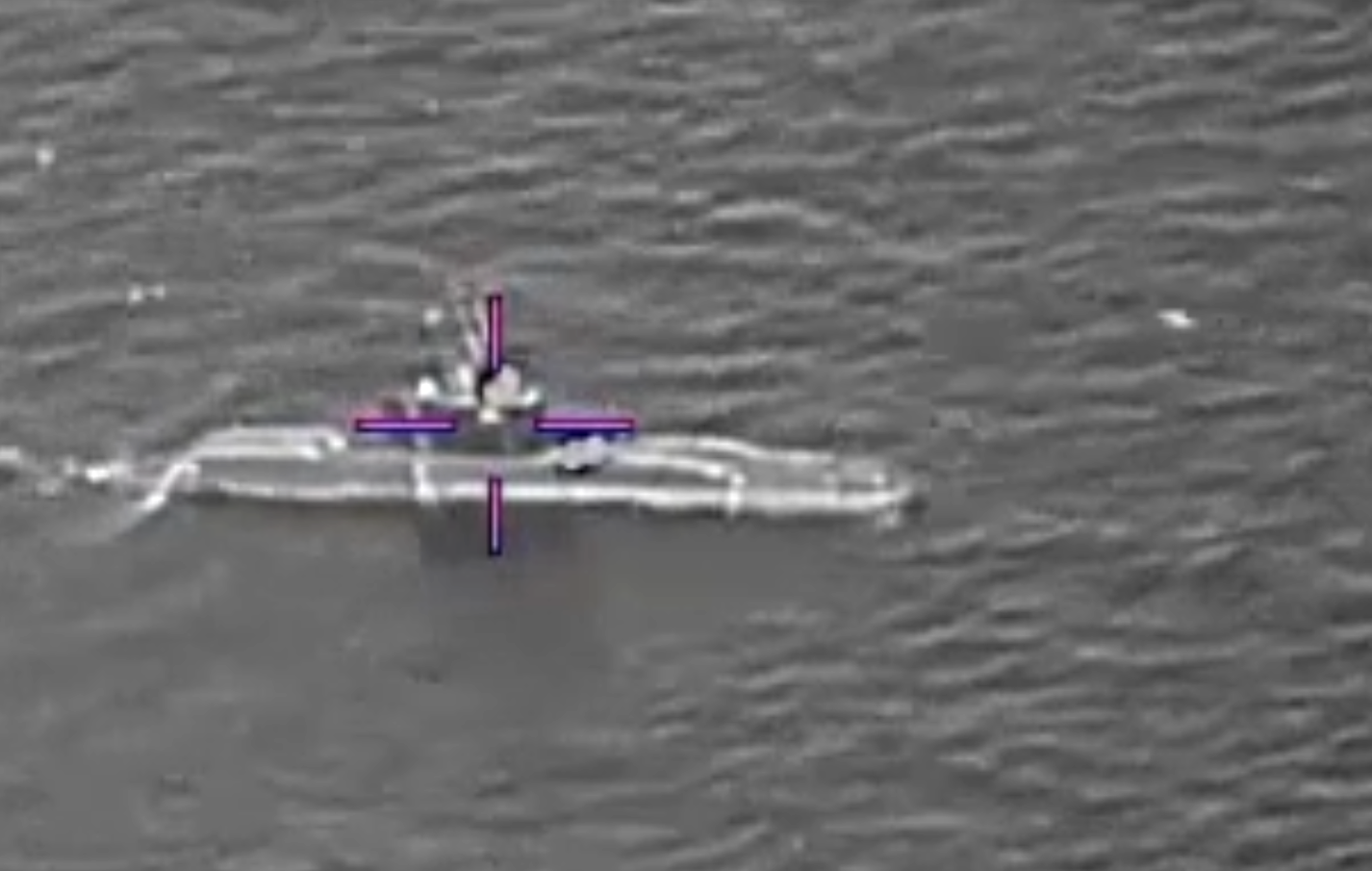
Several cases touch water, ships, ocean surface context, or luminous/energy behavior. The archive has enough of these to justify a separate maritime and ocean-hypothesis lane.
UAPs.world keeps this analysis report connected to its original source path, release context, and related analysis path so readers can inspect the evidence trail directly.
Analysis report summary
This analysis page exposes the report substance directly for readers and crawlers, while the research viewer remains the place for source inspection, frame review, and follow-up work.
Source Basis
This report consolidates ocean-adjacent cases, ship-crossing analysis, luminous field depiction, and a guarded maritime-hypothesis brief. It cites DOD 111720696 video, IIR 1 666 S0151 23/Video Footage of Unidentified Aerial Phenomenon (UAP) captured by fifth generation aircraft on 20 Jan 23, DOD 111720700 video, DOD 111720752 video, DOD 111719709 video, and (CALLSIGN) (Mission) UAP.
Observation
Several cases touch water, ships, ocean surface context, or luminous/energy behavior. The archive has enough of these to justify a separate maritime and ocean-hypothesis lane.
Working Assessment
Use this report for oceanic and ship-proximity cases. Its job is to keep maritime source states organized, keep conventional water/sensor controls active, and prevent the stranger hypothesis space from outrunning the evidence.
DOD 111719709 Thermal Wake / Field-Effect Amendment
Source anchor: DOD 111719709 video, captured at local 2.588s, with source jump Open captured source state. Captured hypothesis: the submitted lead asks whether the smoke-like thermal appearance could be an atmospheric or ocean-surface effect from a non-human craft reactor, with the actual craft partly cloaked around the visible disturbance. That is a useful maritime model question, but the source evidence should keep it as a test lane rather than a conclusion. Source-frame review aid: Enhanced crop aid: Four-frame observations from the requested 3-second balanced window:
DOD 111719709 Thermal Wake / Field-Effect Amendment
The later sample includes stronger dark compact shapes and a bright trailing region in the broader scene.
This is the best frame for a field-effect hypothesis, but conventional wake/thermal contrast remains live.
Theoretical scene panels:
DOD 111719709 Thermal Wake / Field-Effect Amendment
Panel
Read
Boundary
A - Source frame
The visible evidence is a maritime thermal scene with bright wake-like lanes, compact dark returns, and strong sea-surface texture.
Evidence only.
B - Geometry read
The plume/wake pattern appears elongated along the same broad direction as other water texture and bright streaking.
This weakens any claim that the streak alone proves a self-contained craft field.
C - Field model
Under the disclosure-forward maritime model, the visible disturbance could be treated as an interaction envelope: a cloaked body or field system couples to water vapor, sea surface, or sensor response.
Speculative synthesis; it needs independent motion, stable boundaries, or sensor corroboration.
D - Control lane
A conventional maritime wake, small surface craft, thermal contrast, compression, or platform/sensor stabilization can produce a similar smoke-like read.
These controls remain stronger than the reactor/cloak explanation unless the object separates from the wake or behaves anomalously.
Working assessment: keep DOD 111719709 in the maritime/ocean hypothesis lane as a field-effect candidate. The submitted state strengthens the report by identifying a concrete test: whether the compact returns and wake-like thermal streaks move together as ordinary surface activity or whether a coherent invisible/field boundary can be tracked across adjacent frames. On the current four-frame pass, the honest source-backed result is "plume-like maritime thermal behavior, unresolved," not "reactor exhaust" or "cloaked craft confirmed."
This index consolidates the prior methodology and release-map notes. It references the main documentary families: DOW mission reports such as Mission Report, Greece, January 2024, Mission Report, United Arab Emirates, October 2023, Mission Report, Iraq,...
These cases are defined by abrupt state changes: rapid exit, apparent disappearance, target switching, second contact emergence, or lock behavior that becomes hard to interpret using ordinary continuous motion assumptions.
The common thread is interaction with background or medium: occlusion, dark boundary, discoloration, water-adjacent behavior, and crossing geometry near ships or surfaces.
Classify this source for 2 points, mark useful or misleading records for 1 point, or submit observations for curator review. Public contribution points progress through Observer, Analyst I, Analyst II, Case Builder, and Archivist and can unlock field desk themes.