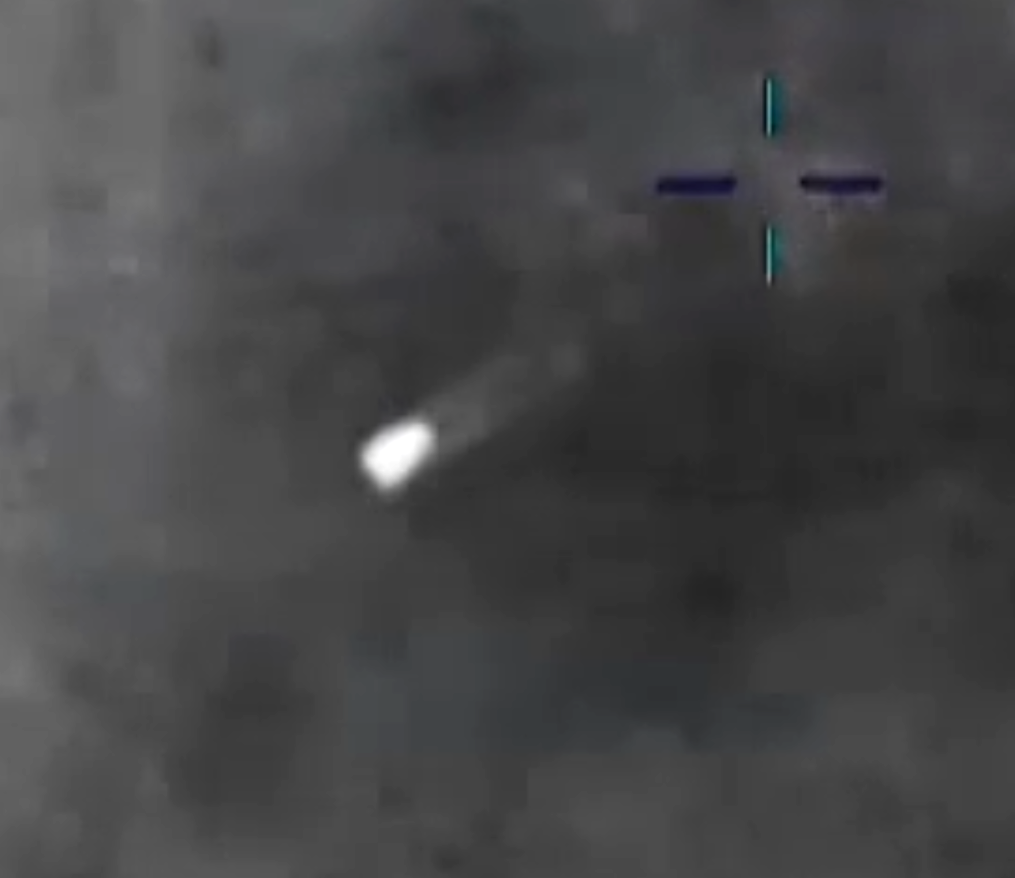
The captured frame shows a compact bright contact with a faint, tapered extension trailing back into the darker background. The visible contact is not a clean hard-edged dot: it has a bright saturated core and a softer aft or sideward smear. The frame is highly zoomed, so...
UAPs.world keeps this analysis report connected to its original source path, release context, and related analysis path so readers can inspect the evidence trail directly.
Analysis report summary
This analysis page exposes the report substance directly for readers and crawlers, while the research viewer remains the place for source inspection, frame review, and follow-up work.
Observation
The captured frame shows a compact bright contact with a faint, tapered extension trailing back into the darker background. The visible contact is not a clean hard-edged dot: it has a bright saturated core and a softer aft or sideward smear. The frame is highly zoomed, so compression and resampling are part of the source-visible problem. This lead asks for observable features, motion cues, and source-backed analysis opportunities. The strongest observable feature is the bright-core / faint-tail morphology.
Hypothesis To Test
Tail/envelope hypothesis: if the faint extension remains attached to the bright core across adjacent frames and follows the object rather than the sensor grid, it may represent a physical trail, field boundary, or motion-related envelope. If the extension changes with zoom, compression, sharpening, or background texture, it is more likely an imaging artifact around a bright unresolved source. This is not a size proof or craft-identification proof. It is a morphology test.
Why It Matters
The case is useful because it connects morphology, motion, and possible field effects. A persistent asymmetric tail would support a stronger analysis lane than a single bright blob. But if the tail appears only at high zoom or only under a particular filter, it should remain a sensor/processing lead.
Working Assessment
Assessment: useful bright-core / tail morphology lead. The capture supports testing for a trailing or envelope-like extension, but the evidence is provisional until neighboring frames show persistence. Treat it as an approved C12 - Shape Size and Plane Backdrop Assessments follow-up, not as a resolved field-propulsion claim.
Classify this source for 2 points, mark useful or misleading records for 1 point, or submit observations for curator review. Public contribution points progress through Observer, Analyst I, Analyst II, Case Builder, and Archivist and can unlock field desk themes.