Observation
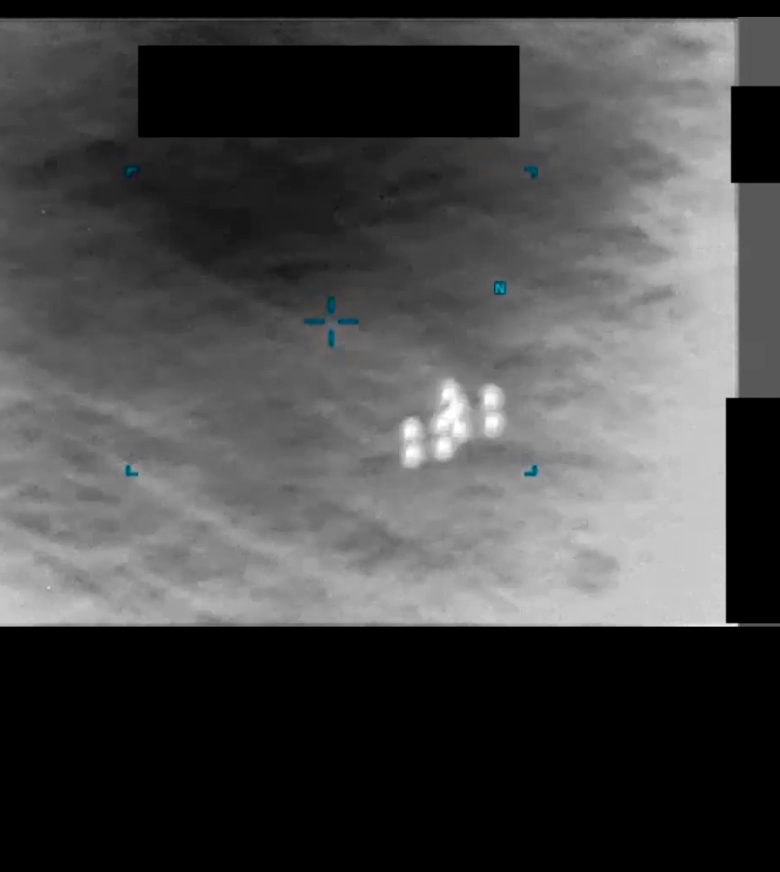
Cluster cases show the hardest counting problem: are we looking at multiple bodies, one body with several field nodes, sensor artifacts, or background features being interpreted as contacts?

Cluster cases show the hardest counting problem: are we looking at multiple bodies, one body with several field nodes, sensor artifacts, or background features being interpreted as contacts?
UAPs.world keeps this analysis report connected to its original source path, release context, and related analysis path so readers can inspect the evidence trail directly.
This analysis page exposes the report substance directly for readers and crawlers, while the research viewer remains the place for source inspection, frame review, and follow-up work.
Cluster cases show the hardest counting problem: are we looking at multiple bodies, one body with several field nodes, sensor artifacts, or background features being interpreted as contacts?
Formation-travel hypothesis: if the bright elements remain separable across adjacent frames while preserving spacing or correlated motion, this becomes a genuine multi-contact lead. Under the disclosure-forward field model, that could indicate a coordinated squadron, a distributed probe group, or one field system presenting multiple luminous nodes. The stronger claim requires motion evidence, not just count evidence. The key question is whether the same bright elements persist as separate centroids before and after 54.664s. ### Working Assessment The source-backed statement is: > In DOD 111719813 video, the 54.664s capture shows a compact cluster of several bright returns that visually supports a squadron...
Use this report for multi-contact triage. When a clip shows separation, synchronized movement, or sudden group reconfiguration, it belongs here.
These images are rendered directly for quick review, with clean image pages for crawlers and viewer links for inspection.
![DOW-UAP-PR097, "Hi-Res: [CALLSIGN] Observes UAP on 25SEP19 at 2135Z"](/?open=Release_2%2FAnalysis%2Fimages%2Fvideo-2605-dod-111719813-dod-111719813-20260601t121101z-capture-lead.png)
analysis image
Release_2/Analysis/images/video-2605-dod-111719813-dod-111719813-20260601t121101z-capture-lead.png · Updated 2026-06-13

analysis image
Release_2/Analysis/images/video-2605-dod-111719813-54770-frame-review-source-frame-contact-sheet.png · Updated 2026-07-19

analysis image
Release_2/Analysis/images/video-2605-dod-111719813-54770-frame-review-geometry-review.png · Updated 2026-07-19
![DOW-UAP-PR097, "Hi-Res: [CALLSIGN] Observes UAP on 25SEP19 at 2135Z"](/?open=Release_2%2FAnalysis%2Fimages%2Fvideo-2605-dod-111719813-dod-111719813-20260606t014701z-capture-lead.png)
analysis image
Release_2/Analysis/images/video-2605-dod-111719813-dod-111719813-20260606t014701z-capture-lead.png · Updated 2026-06-13

analysis image
Release_2/Analysis/images/video-2605-dod-111719833-fleet-field-interpretive-reconstruction.png · Updated 2026-06-13

analysis image
Release_2/Analysis/images/video-2605-dod-111719833-dod-111719833-20260524t154755z-capture-lead.png · Updated 2026-06-13
Classify this source for 2 points, mark useful or misleading records for 1 point, or submit observations for curator review. Public contribution points progress through Observer, Analyst I, Analyst II, Case Builder, and Archivist and can unlock field desk themes.

