C40 PR056 Pulsing Over Water Energy Contraction Lead
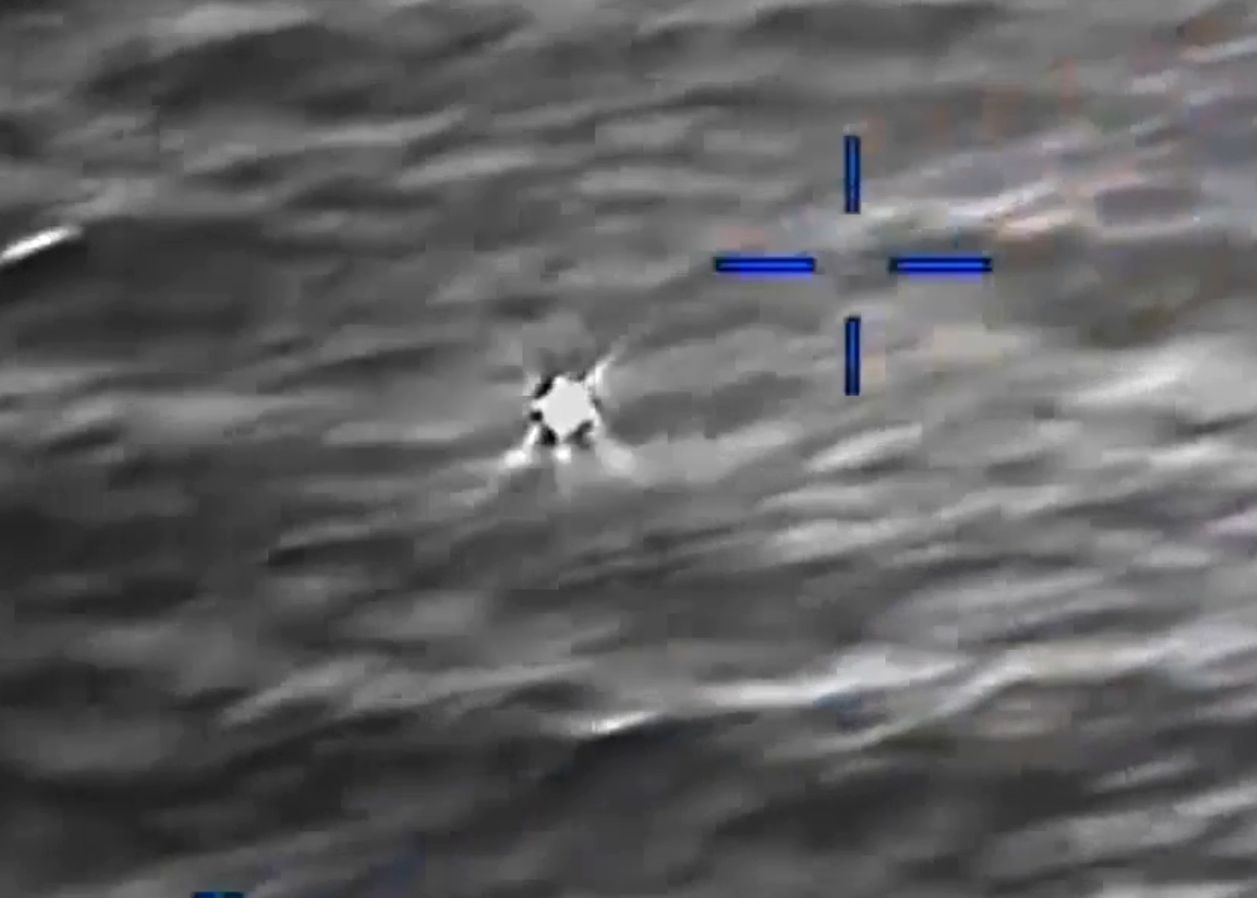
The PR056 lead sequence shows a compact bright contact over a mottled water/cloudlike background. At lower zoom near 122.125s, the target is a small bright body with a darker surrounding edge and no resolved conventional structure. At close zoom around 125.986s, the contact...
UAPs.world keeps this analysis report connected to its original source path, release context, and related analysis path so readers can inspect the evidence trail directly.
Analysis report summary
This analysis page exposes the report substance directly for readers and crawlers, while the research viewer remains the place for source inspection, frame review, and follow-up work.
Observation
The PR056 lead sequence shows a compact bright contact over a mottled water/cloudlike background. At lower zoom near 122.125s, the target is a small bright body with a darker surrounding edge and no resolved conventional structure. At close zoom around 125.986s, the contact resolves into a saturated white upper lobe with a smaller bright lower lobe, separated by a dark rim or shadowed boundary. At 126.991s, the same region becomes a much larger starburst-like bloom with radial saturated arms. By 129.081s, the contact appears smaller and more concentrated again. The source-backed claim is therefore narrow but useful: across the captured states, PR056 changes from compact bright contact, to...
Hypothesis To Test
The working hypothesis is that PR056 may show a boundary-state event rather than ordinary smooth motion: the visible target could be a compact body or field node whose sensor-visible envelope expands, saturates, and contracts over a few seconds. The competing conventional hypotheses remain active: - unresolved hot or reflective point source blooming under sensor gain; - compression around a high-contrast target; - thermal preset exaggerating a normal bright contact; - platform/sensor motion smearing a point source over textured water; - digital alteration in the public release pipeline; - display capture state making the 157.143s thermal frame appear blank even if the raw frame contains detail.
Why It Matters
This lead set gives the archive a stronger PR056 physics prompt than a single burst screenshot. It creates a sequence: compact contact, apparent contraction, burst, compact return, and possible blank/dropout. That sequence is exactly the kind of pattern C35 - Macroscopic Quantum States and Long Duration Travel Hypothesis needs for state-transition language, and exactly the kind of pattern C07 - Field Propulsion and Morphology Model needs for hull-versus-envelope testing.
Working Assessment
Promote PR056 as a high-priority state-transition and field-envelope test case. The source supports "visible pulsing/bloom/contraction behavior in captured viewer states," and the five-frame source extraction around 126.991s adds a stronger local anchor: stable target centroid with a shrinking saturated footprint. The wider 121.5s to 130.0s pass shows repeated target persistence and variable footprint, but it also shows why unconstrained brightness metrics are dangerous over water. The 157.143s control pass resolves the black thermal capture as a viewer/filter/export issue rather than raw source blankness. PR056 still does not support measured energy output, confirmed propulsion, or a specific craft...
Classify this source for 2 points, mark useful or misleading records for 1 point, or submit observations for curator review. Public contribution points progress through Observer, Analyst I, Analyst II, Case Builder, and Archivist and can unlock field desk themes.

![DOW-UAP-PR056, "Spherical UAP pulsing over water [CALLSIGN]"](/?open=Release_2%2FAnalysis%2Fimages%2Fvideo-2605-dod-111719741-dod-111719741-20260607t163420z-capture-lead.png)
![DOW-UAP-PR056, "Spherical UAP pulsing over water [CALLSIGN]"](/?open=Release_2%2FAnalysis%2Fimages%2Fvideo-2605-dod-111719741-dod-111719741-20260607t163503z-capture-lead.png)
![DOW-UAP-PR056, "Spherical UAP pulsing over water [CALLSIGN]"](/?open=Release_2%2FAnalysis%2Fimages%2Fvideo-2605-dod-111719741-dod-111719741-20260607t163615z-capture-lead.png)
![DOW-UAP-PR056, "Spherical UAP pulsing over water [CALLSIGN]"](/?open=Release_2%2FAnalysis%2Fimages%2Fvideo-2605-dod-111719741-dod-111719741-20260607t163656z-capture-lead.png)
![DOW-UAP-PR056, "Spherical UAP pulsing over water [CALLSIGN]"](/?open=Release_2%2FAnalysis%2Fimages%2Fvideo-2605-dod-111719741-dod-111719741-20260607t163755z-capture-lead.png)
![DOW-UAP-PR056, "Spherical UAP pulsing over water [CALLSIGN]"](/?open=Release_2%2FAnalysis%2Fimages%2Fpr056-hypothesis-craft-field-envelope-realistic.png)


