The source frames at 9.256s, 14.000s, and 20.000s show a compact bright object over a horizontally banded background. The contact keeps a broadly vertical, diamond/teardrop-like body rather than collapsing into a single unresolved point. Darker side margins flank the bright...
UAPs.world keeps this analysis report connected to its original source path, release context, and related analysis path so readers can inspect the evidence trail directly.
Analysis report summary
This analysis page exposes the report substance directly for readers and crawlers, while the research viewer remains the place for source inspection, frame review, and follow-up work.
Observation
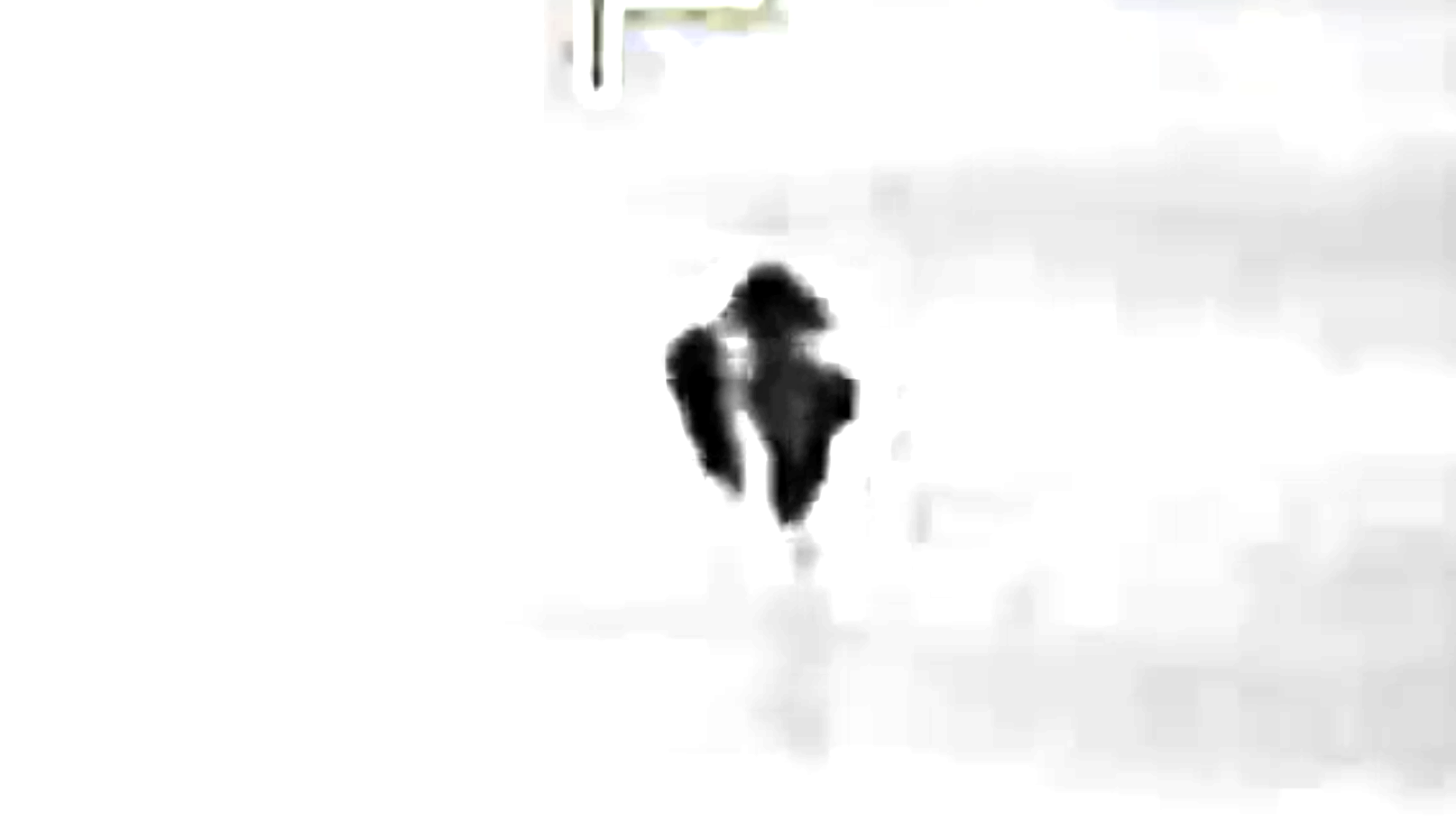
The source frames at 9.256s, 14.000s, and 20.000s show a compact bright object over a horizontally banded background. The contact keeps a broadly vertical, diamond/teardrop-like body rather than collapsing into a single unresolved point. Darker side margins flank the bright core in all three visible samples, and a narrower lower extension or taper appears beneath the main body. The captured inverted view strengthens the edge question: with high contrast and inversion, the object reads as a dark central body with two brighter internal streaks and dark lobed shoulders. That filtered view is useful for shape review, but it should not be treated as the raw object color or material. No exhaust plume, wing,...
Hypothesis To Test
The useful hypothesis is not "this frame proves a field." The useful test is whether PR063 shows a stable body-plus-boundary signature early in the track. Working hypothesis: the bright center is the source-visible contact, while the darker paired margins and lower taper may be a boundary layer, sensor bloom edge, field envelope, or unresolved physical geometry. If the side margins remain locked to the contact across more frames while the background shifts independently, the source supports the C07 - Field Propulsion and Morphology Model field/body visibility stack. If the margins scale with contrast, compression blocks, or viewer filtering, the safer interpretation is sensor/image-chain edge behavior...
Why It Matters
PR063 is already a recurring anchor in the archive for field morphology, occlusion, water/surface context, and physics speculation. This early-sequence lead adds a cleaner opening-window observation: before the later obstruction and water-context questions, the contact already presents as a compact bright body with persistent side-boundary structure. That makes the clip useful for measuring boundary stability across time.
Working Assessment
Promote this lead as a source-backed morphology test, not as a proof of propulsion or exotic physics. The strongest supported claim is: in the visible early samples from Spherical UAP (CALLSIGN) 2021/04/12 vid 2, the object maintains a compact upright bright core with darker flanking margins and a lower taper across 9.256s, 14.000s, and 20.000s. That is consistent with a body-plus-boundary review model, but it remains unresolved between physical morphology, field-envelope behavior, IR bloom, sharpening, compression, and contrast/filter response.
Classify this source for 2 points, mark useful or misleading records for 1 point, or submit observations for curator review. Public contribution points progress through Observer, Analyst I, Analyst II, Case Builder, and Archivist and can unlock field desk themes.

![DOW-UAP-PR058, "[CALLSIGN] (Mission) UAP"](/?open=Release_2%2FAnalysis%2Fimages%2Fvideo-2605-dod-111719800-dod-111719800-20260610t042147z-capture-lead.png)
![DOW-UAP-PR058, "[CALLSIGN] (Mission) UAP"](/?open=Release_2%2FAnalysis%2Fimages%2Fvideo-2605-dod-111719800-0-20s-contact-sheet.png)
![DOW-UAP-PR058, "[CALLSIGN] (Mission) UAP"](/?open=Release_2%2FAnalysis%2Fimages%2Fvideo-2605-dod-111719800-11p615-16p615-field-dynamics-8-frame-sheet.jpg)
![DOW-UAP-PR058, "[CALLSIGN] (Mission) UAP"](/?open=Release_2%2FAnalysis%2Fimages%2Fvideo-2605-dod-111719800-11p615-16p615-field-dynamics-8-frame-crop-sheet.jpg)
![DOW-UAP-PR058, "[CALLSIGN] (Mission) UAP"](/?open=Release_2%2FAnalysis%2Fimages%2Fvideo-2605-dod-111719800-frame-9p256s.png)
![DOW-UAP-PR058, "[CALLSIGN] (Mission) UAP"](/?open=Release_2%2FAnalysis%2Fimages%2Fvideo-2605-dod-111719800-frame-14s.png)
