UAPs.world keeps this analysis report connected to its original source path, release context, and related analysis path so readers can inspect the evidence trail directly.
Analysis report summary
This analysis page exposes the report substance directly for readers and crawlers, while the research viewer remains the place for source inspection, frame review, and follow-up work.
Hypothesis To Test
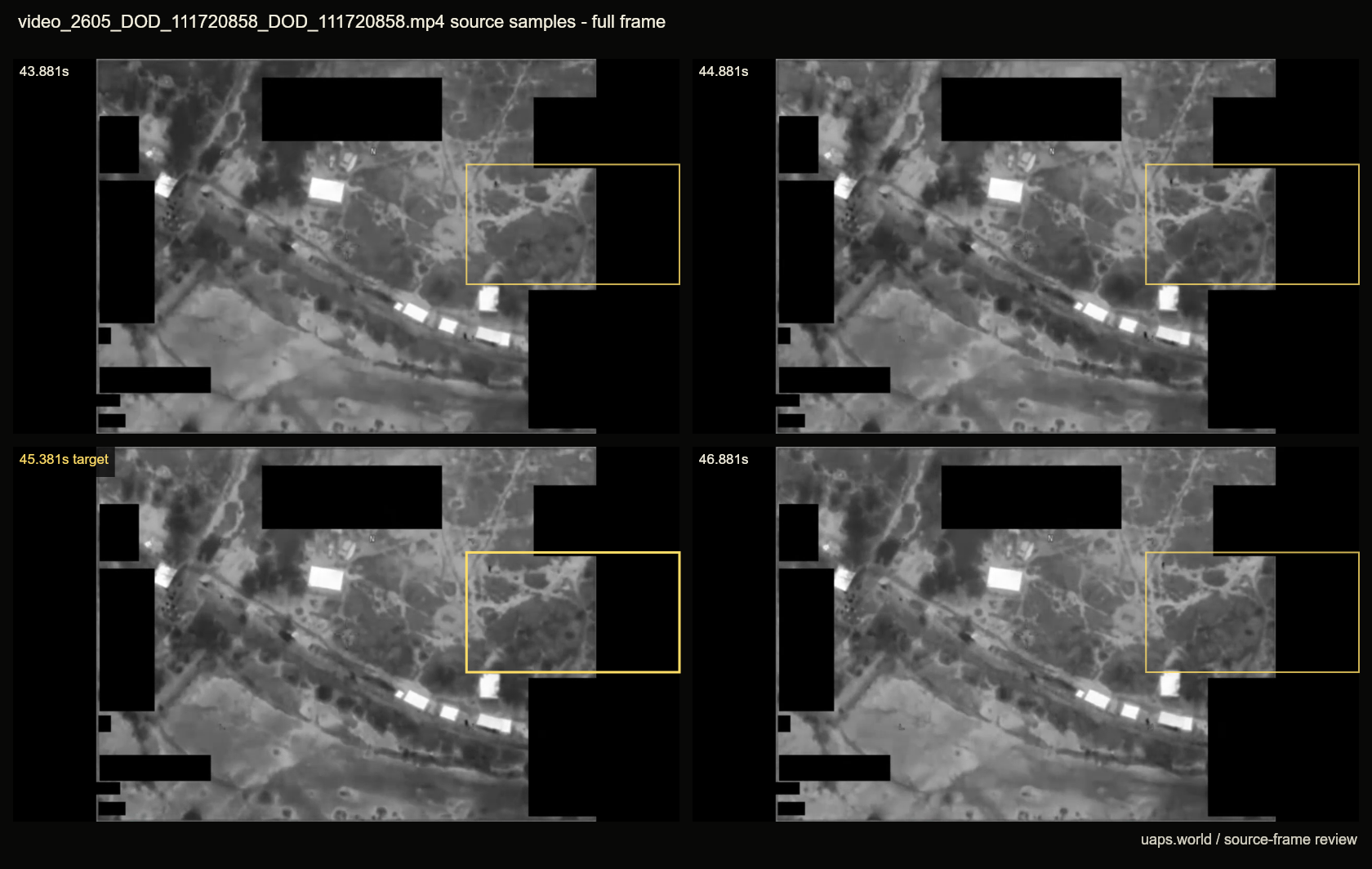
The strongest hypothesis is a sensor-control hypothesis, not a new object claim: if ordinary human/ground features in DOD 111720858 become puffy and blob-like under this view, then UAP shape reports from comparable sensor states should be stated with caution. That hypothesis is supported. The four-frame pass shows the sensor and zoom state can reduce ordinary scene content into soft lobes, halos, and merged edges.
Working Assessment
Approve this lead as a useful calibration note. It weakens overconfident morphology claims from similar sensor states and strengthens the archive's evidence discipline. The Disclosure-Forward Neutrality Gate passes because the report keeps the field-envelope hypothesis alive while requiring ordinary sensor-response controls before shape claims are upgraded.
Classify this source for 2 points, mark useful or misleading records for 1 point, or submit observations for curator review. Public contribution points progress through Observer, Analyst I, Analyst II, Case Builder, and Archivist and can unlock field desk themes.