A guided route through high-salience UAP topic families, local source anchors, witness-chain records, media triage, and related analysis reports.
Analysis report summary
This analysis page exposes the report substance directly for readers and crawlers, while the research viewer remains the place for source inspection, frame review, and follow-up work.
Observation
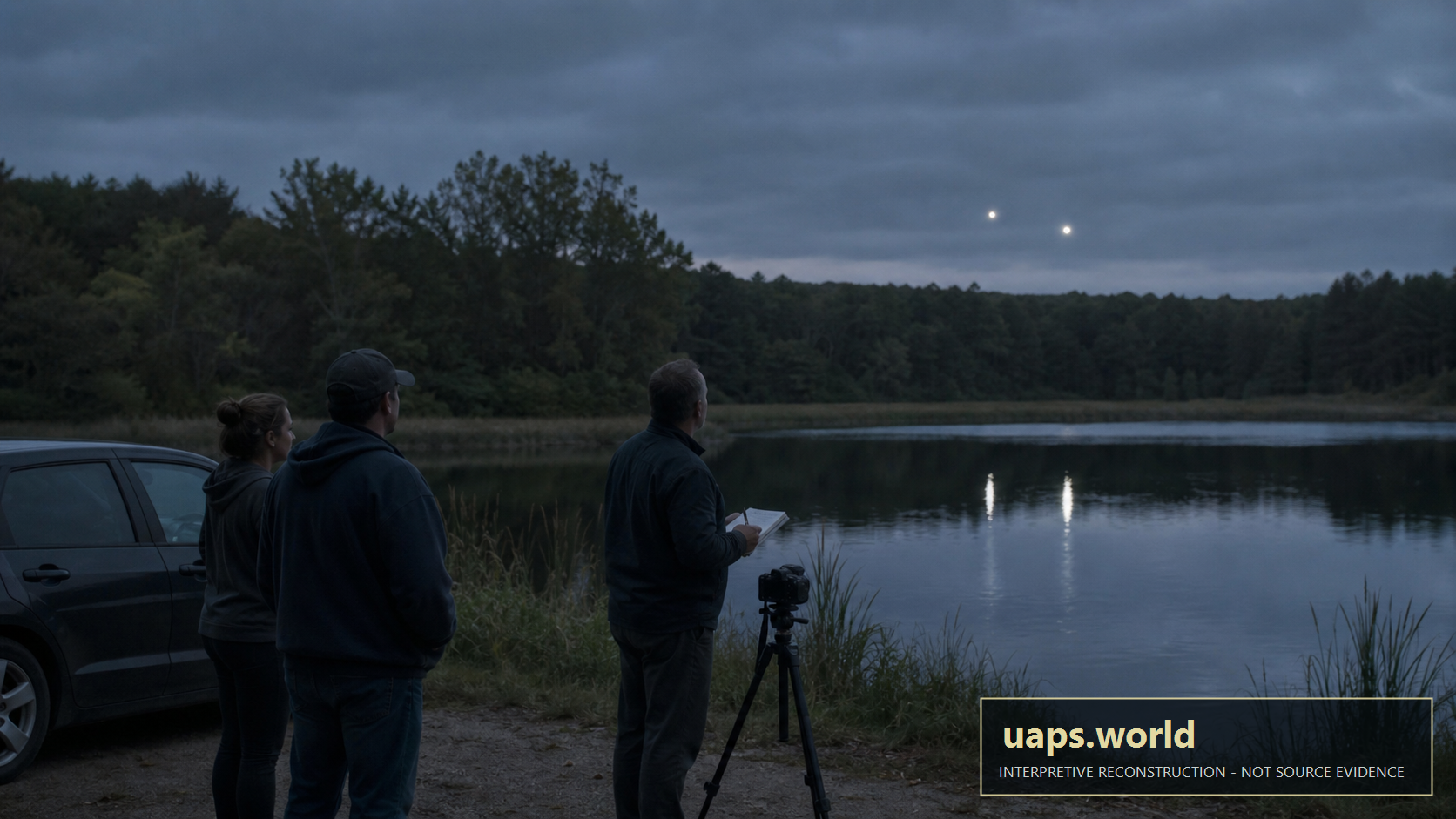
Release 3 changes the archive's public posture because it is not only a military-sensor release. It gives the viewer a mixture of private-citizen phone footage, FBI interview chains, official witness renderings, historical intelligence records, NASA/spaceflight material, and conventional-analysis controls. That mix is the story: the release places ordinary witness media beside formal government intake and older policy documents, so the analysis layer has to distinguish evidence types instead of flattening them into one disclosure claim. The domestic orb lane is the most immediately visual. Orbs Over the Pond and Northeastern Orb Sighting carry descriptions of plasma-like luminosity, smooth and silent...
Hypothesis To Test
The strongest Release 3 synthesis hypothesis is not "one case proves the archive." It is that this release exposes a chain of custody problem across decades: credible or official witnesses, imperfect media, interpretive government products, and policy frameworks are all present in the same disclosure package. Disclosure-forward hypothesis: the repeated luminous-orb descriptions, formation/tandem behavior, separation or discharge of smaller points, and sensitive-site event clustering may represent a real anomalous system whose observable signature is not a conventional craft silhouette but a field/luminosity envelope. Under this model, the red-white center/halo, plasma-like sphere language, and multi-point...
Why It Matters
This topic routing helps the viewer avoid two bad shortcuts. The first shortcut is spectacle: treating every official rendering or phone-video light as direct proof of a structured craft. The second shortcut is flattening: treating low-light ambiguity or historical debunking posture as enough to close the whole archive. Release 3 needs a middle discipline: each topic gets its own evidence chain, control set, and confidence boundary. The domestic orb videos should feed frame-level work. The Western U.S. packet should feed document-timeline work. The CIA advisory-panel and historical files should feed disclosure-pattern work. Zimbabwe and Colorado Springs should feed international/security and...
Working Assessment
Release 3's public-interest topics are strongest when read as a system of evidence types. The most actionable near-term work is to keep the orb videos and FBI forms paired, keep renderings marked as interpretive aids, and keep historical policy records visible as context for how official institutions have framed the subject. Under a disclosure-forward model, the repeated luminous-orb and multi-point behavior deserves serious comparison across northeastern videos and Western U.S. statements. Under a conservative model, the Colorado Springs analysis, phone-camera limits, reflections, backscatter, and reconstruction boundaries remain active controls. The viewer should make both lanes easy to inspect.
Public Field Desk
Classify this source for 2 points, mark useful or misleading records for 1 point, or submit observations for curator review. Public contribution points progress through Observer, Analyst I, Analyst II, Case Builder, and Archivist and can unlock field desk themes.